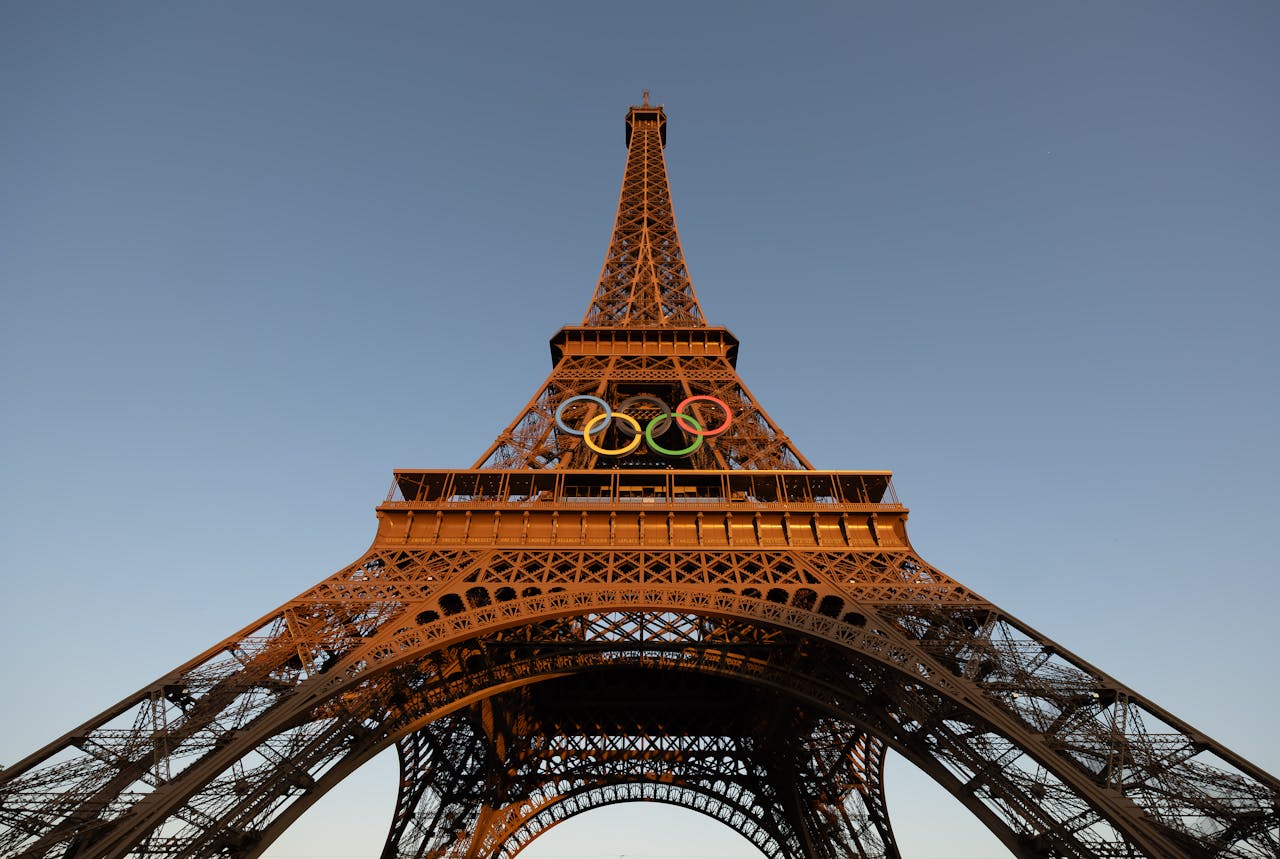

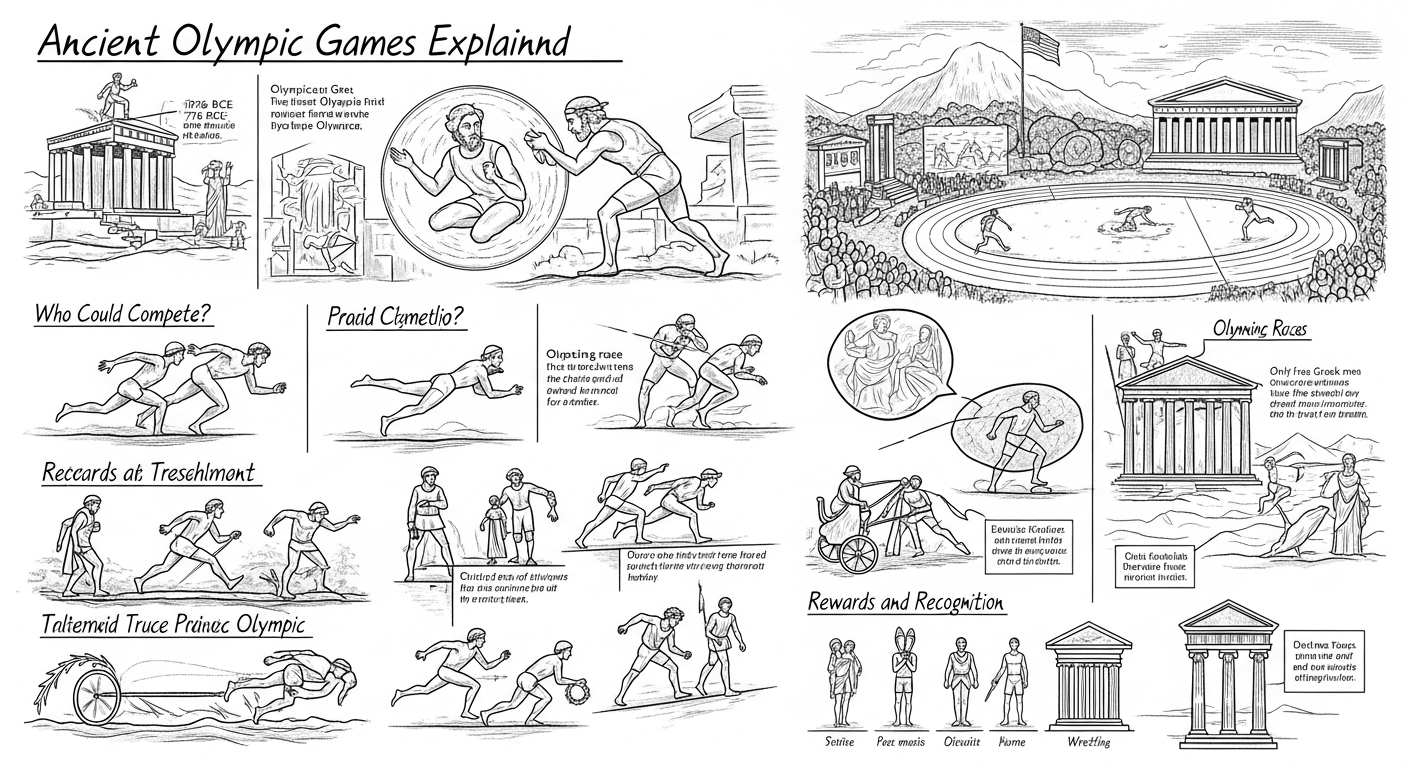
The Ancient Olympic Games were one of the most important events in ancient Greek culture, combining sport, religion, and social unity. First held in 776 BCE in Olympia, these games laid the foundation for what would eventually become the modern Olympic movement.
Origins of the Ancient Olympics
The Olympics began as part of a religious festival dedicated to Zeus, the king of the Greek gods. Olympia was considered a sacred site, and athletes competed not just for victory, but to honor the gods.
Initially, the games featured only one event — a short foot race known as the stadion. Over time, more events were added, transforming the Olympics into a multi-sport competition.
Events in the Ancient Olympic Games
As the games evolved, several athletic events became central:
- Running races (various distances)
- Wrestling
- Boxing
- Chariot racing
- The pentathlon (running, long jump, discus, javelin, wrestling)
The pentathlon was considered the ultimate test of strength, speed, and skill.
Who Could Compete?
Only free Greek men were allowed to compete. Women were not permitted to participate or even watch the games in most cases.
Athletes trained for years and had to meet strict standards before competing. Participation itself was considered an honor.
The Olympic Truce
One of the most remarkable traditions was the Olympic Truce (Ekecheiria). During the games, all conflicts between Greek city-states were temporarily halted.
This allowed athletes and spectators to travel safely to Olympia, highlighting how seriously the Greeks valued the Olympics.
Rewards and Recognition
Unlike modern athletes, winners did not receive money. Instead, they were awarded an olive wreath.
However, the real reward was fame. Victors were treated as heroes in their home cities, often receiving:
- Free meals for life
- Public honors
- Statues built in their name
Cultural and Religious Importance
The Olympics were more than sports. They were a cultural gathering where people shared ideas, art, and traditions.
Poets, philosophers, and historians often attended, making the games a center of intellectual life as well.
Decline of the Ancient Olympics
The games continued for over a thousand years but gradually declined as Greece came under Roman control.
In 393 CE, Roman Emperor Theodosius I banned pagan festivals, bringing the Olympic Games to an end.
Legacy of the Ancient Olympics
Despite their disappearance, the influence of the ancient Olympics never faded.
Their ideals of competition, excellence, and unity inspired the revival of the Olympic Games in 1896, shaping the global event we know today.